
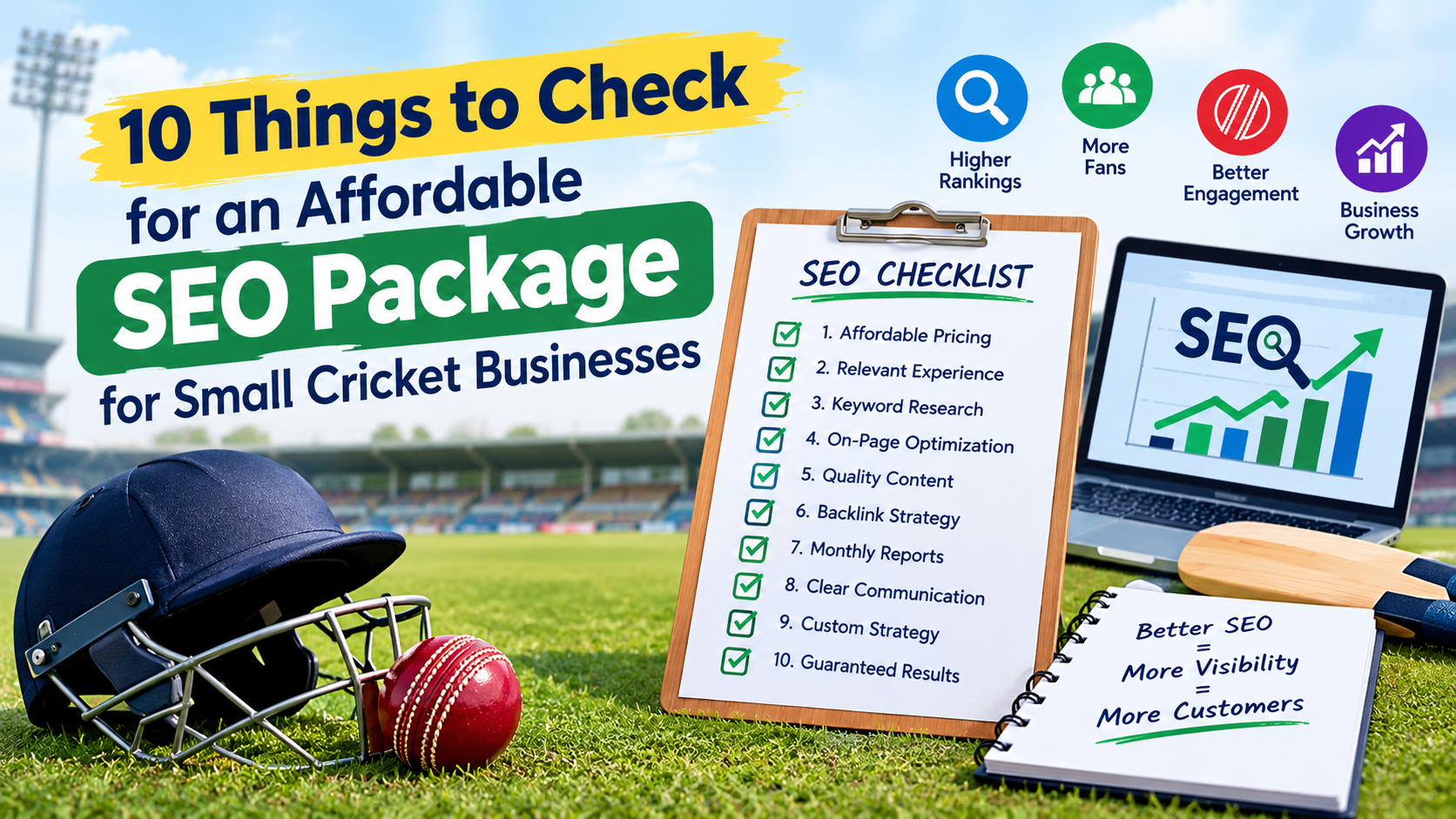
A local cricket academy, club, sports shop or coaching business needs to be easy to find when people search for lessons, fixtures, equipment or venues nearby. But a low monthly price alone does not make an SEO service a good fit. Use these 10 things to check for an affordable SEO package before committing, and judge the offer by what it includes and how it supports your actual goals.
SEO is the work of improving a website’s visibility in unpaid search results. It takes time, and no provider can responsibly promise a particular ranking by a fixed date. For a small organisation with a limited budget, clarity about the work matters as much as the price. This guide to affordable SEO packages also outlines points to compare before choosing a service.
1. Clear goals for your website
Start by asking what you need search traffic to accomplish. A cricket academy may want more enquiries for junior coaching, while a sports retailer may be focused on online sales or visits to a shop. The package should connect its activities to those goals, rather than offering a vague promise to “improve SEO.” Agree on useful measures such as calls, enquiry forms, bookings or relevant visits.
2. Keyword research that reflects local demand
Ask how the provider will find the words potential customers use. Search terms might include a service, location and age group, such as cricket coaching for children in a particular town. Good research considers what people are trying to do, not just which phrases have the largest search volume. Check that the proposed keywords fit your services and the areas you can actually serve.
3. A technical website review
Technical SEO helps search engines access and understand a site. A package should check for practical issues such as broken pages, slow loading, mobile usability, indexing problems and confusing page structure. Ask what the review covers and whether the provider will make fixes or simply give you a report. If your website is difficult to use on a phone, that can also make it harder for a parent to find a timetable or send an enquiry.
4. Useful content, not a post-count target
Content should answer questions your audience has. A coaching academy could explain its age groups, session locations, equipment requirements and trial options. A club might publish clear information about membership or match-day facilities. Find out who writes the content, who checks its accuracy and whether it is included in the fee. A promise of many generic articles is less useful than a smaller amount of accurate, original information.
5. A sensible link-building approach
Links from other websites can help people discover your organisation and may contribute to search visibility. Ask how any proposed links will be earned. Relevant local directories, community organisations, league pages or genuine partnerships are more credible than a large batch of unrelated links. Be cautious if a provider will not explain its methods or guarantees a specific number of links regardless of relevance.
6. Local search support
For a business serving one area, local visibility can be especially important. Check whether the package includes advice on your business profile, consistent contact details, location pages and reviews. Information should be accurate: opening hours, venue address and contact details need to match wherever they appear. A club that uses a ground shared with another organisation should make its visitor information particularly easy to understand.
7. A defined list of deliverables
Before signing, ask for a plain-language list of work included each month. It might cover research, technical checks, page updates, content or reporting. Confirm how many pages are involved, who supplies photographs and information, and whether extra work costs more. A transparent scope helps you compare packages fairly and avoid discovering later that essential tasks were excluded.
8. Reporting you can understand
Reports should show what was done and what changed, with an explanation of the numbers. Useful measures may include search impressions, clicks, ranking trends for selected terms, and enquiries from organic search. Rankings alone do not tell the whole story: a page can move up in results without generating relevant visits. Ask how often you will receive updates and whether someone will discuss them with you.
9. A realistic timeline and clear ownership
SEO improvements usually take time, so expect a plan that sets out early tasks as well as longer-term aims. Ask who will make website changes, who owns the finished content and what happens if you end the agreement. Your organisation should retain access to its website, analytics and business profiles. Avoid contracts that make it difficult to leave or keep control of your own accounts.
10. Design and marketing support that fits the budget
Search visibility is only part of a good online presence. Clear branding and readable graphics can help a club look consistent across its site, social posts and event materials. If you need a designer, Osdire’s guide to finding graphic design clients discusses portfolio proof, marketing services and building repeat work—useful background when considering how freelance design projects are found and presented. Keep SEO and design budgets separate enough to see what each piece contributes.
Compare the package with your capacity
The best option is not necessarily the one with the most tasks. A small cricket business may have limited time to approve articles, supply photographs or respond to recommendations. Choose a provider whose plan your team can support, and start with the highest-impact improvements. Ask for a written scope, a sensible reporting schedule and a review point after the first few months.
Affordable SEO should mean focused work with clear costs—not a mystery bundle or a promise of instant results. By checking the research, technical work, content, links and reporting, you can make a more informed decision and choose support that suits your organisation’s real needs.